When people hear "Visual AI in automotive dealerships," they often imagine a plug-and-play solution: cameras watch, AI interprets, insights appear. Reality, of course, is a lot messier.
At SKAIVISION, we've built a platform that thrives in real-world conditions — conditions that are far from clean lab environments. Deploying Visual AI at scale across hundreds of auto dealerships has taught us one key lesson: the devil is in the physical details.
Let me break down some of the biggest (and often invisible) challenges we've faced — and how we've engineered SKAIVISION to meet them head-on.
Cameras: A Moving Target
- IP addresses change without warning.
- Camera orientations get bumped, tilted, or manually adjusted.
- Settings like zoom, white balance, or resolution shift after firmware updates.
- Most transmit ultra-high resolution feeds, wasting bandwidth and processing power for our AI needs.
- Dealerships often have 30+ cameras, yet no credentials and no idea who manages them.
- Their networks are typically locked down, making remote diagnostics nearly impossible.
- Exterior camera setup often requires electricity and internet access in places (like entrances/exits) that weren't designed for tech infrastructure.
Our Approach: We've built a hardware-aware platform with self-tuning mechanisms. SKAIVISION can adapt dynamically to new camera IPs, adjust to variable input resolutions, and process real-time video efficiently even when information is imperfect or incomplete. We also provide standardized deployment kits to help dealerships bring external cameras online — without becoming IT experts.
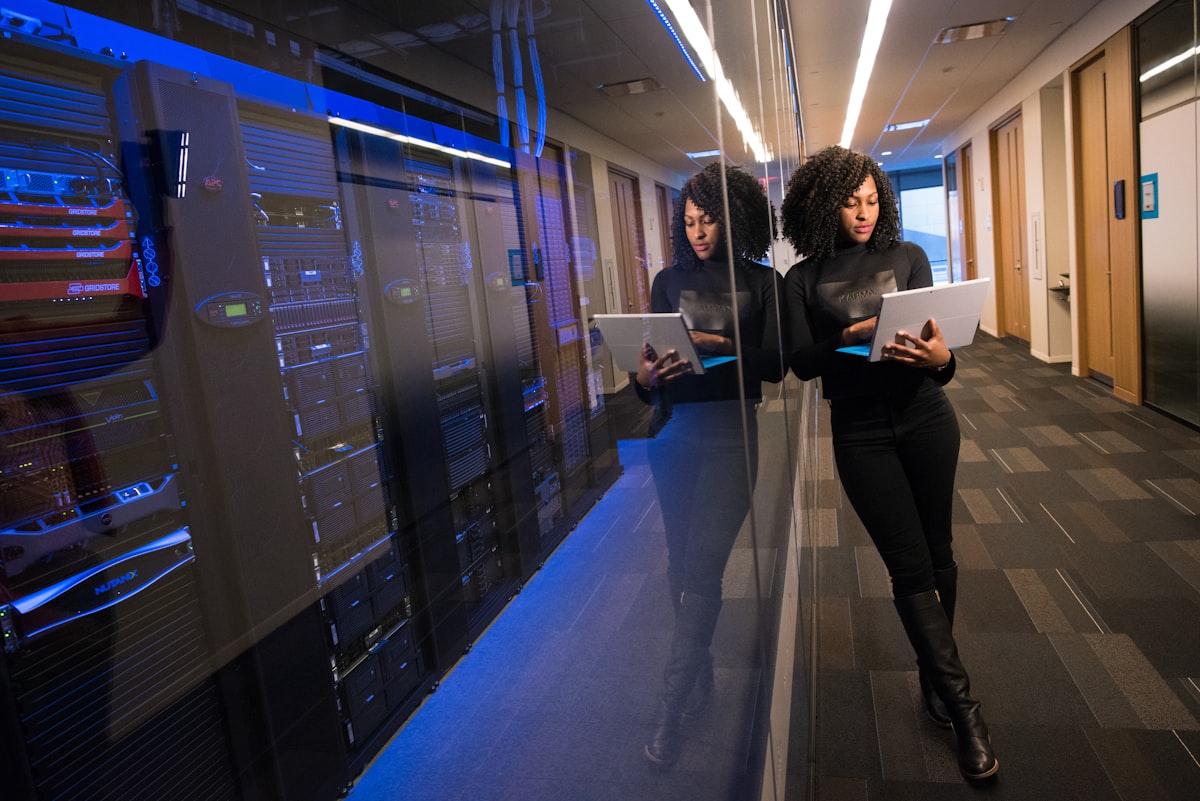
Servers: The Power Behind the AI
- Our edge servers use enterprise-grade NVIDIA GPUs — costly, but essential for fast inference at the edge.
- These units are heavy, which makes shipping and handling a real logistical and cost challenge.
- Dealerships often outsource their IT, and coordinating secure access for configuration can slow deployment.
Our Approach: We designed our server setup with pre-configuration, remote orchestration, and offline fallback options. Even when handed to a third-party IT vendor, SKAIVISION servers can bootstrap themselves into the network with minimal fuss — then connect back to our management tools.
Environment: Controlled Chaos
- Outdoor cameras face rain, glare, shadows, and fluctuating light levels.
- Indoors, we get wide-angle, fisheye, and 360° lenses, each with their own quirks.
- No two dealerships are the same. The layout, lighting, and customer flow vary widely.
Our Approach: We train our AI across thousands of real-world dealership examples — learning to work with imperfect angles, inconsistent lighting, and unpredictable foot traffic. Our models are built to handle noise, distortion, and uncertainty — because the real world doesn't come with ideal conditions.
Visual AI: Doing More With Less
- Most locations don't have overlapping camera coverage, so we track people and vehicles with gaps in visibility.
- Employees frequently exit and re-enter the field of view, complicating behavior tracking.
Our Approach: SKAIVISION uses contextual understanding and temporal stitching to bridge coverage gaps, leveraging motion modeling, zone awareness, and time-based inference to maintain continuity even when eyes aren't always on the target.
What This All Means
At SKAIVISION, we're not just building AI that works — we're building AI that works anywhere. In the chaos of a dealership. In the rain. With cameras no one remembers setting up. With servers no one wants to touch.
This is what it means to deliver production-grade AI in the real world. And as we grow, these are the problems we're proud to solve.