Reduce Express Cycle Time With Visibility Into Where Service Slows Down
Express service breaks down when vehicles sit, handoffs stall, or bays sit idle. SKAIVISION uses existing dealership cameras to track movement, dwell time, and bottlenecks so teams act before delays hurt the customer experience.
Every Delay Has a Cost
Express service depends on speed, coordination, and consistency. But in a busy lane, vehicles can sit in staging, wait for a bay, stay idle after work is complete, or get delayed during handoffs without managers seeing the problem in real time.
When cycle time slips, the store loses capacity, advisors lose control of expectations, technicians and bays are underused, and customers feel the delay. SKAIVISION helps managers see where time is being lost so the team can correct the process instead of guessing after the fact.
How SKAIVISION Tracks Express Movement
The workflow starts with physical activity in the service lane. SKAIVISION uses existing camera coverage to detect vehicle movement, measure time between stages, and surface process delays that are difficult to catch manually.
Vehicle Enters the Lane
SKAIVISION detects when a vehicle arrives in the monitored service area and begins tracking the event based on camera coverage and dealership configuration.
Movement Is Measured
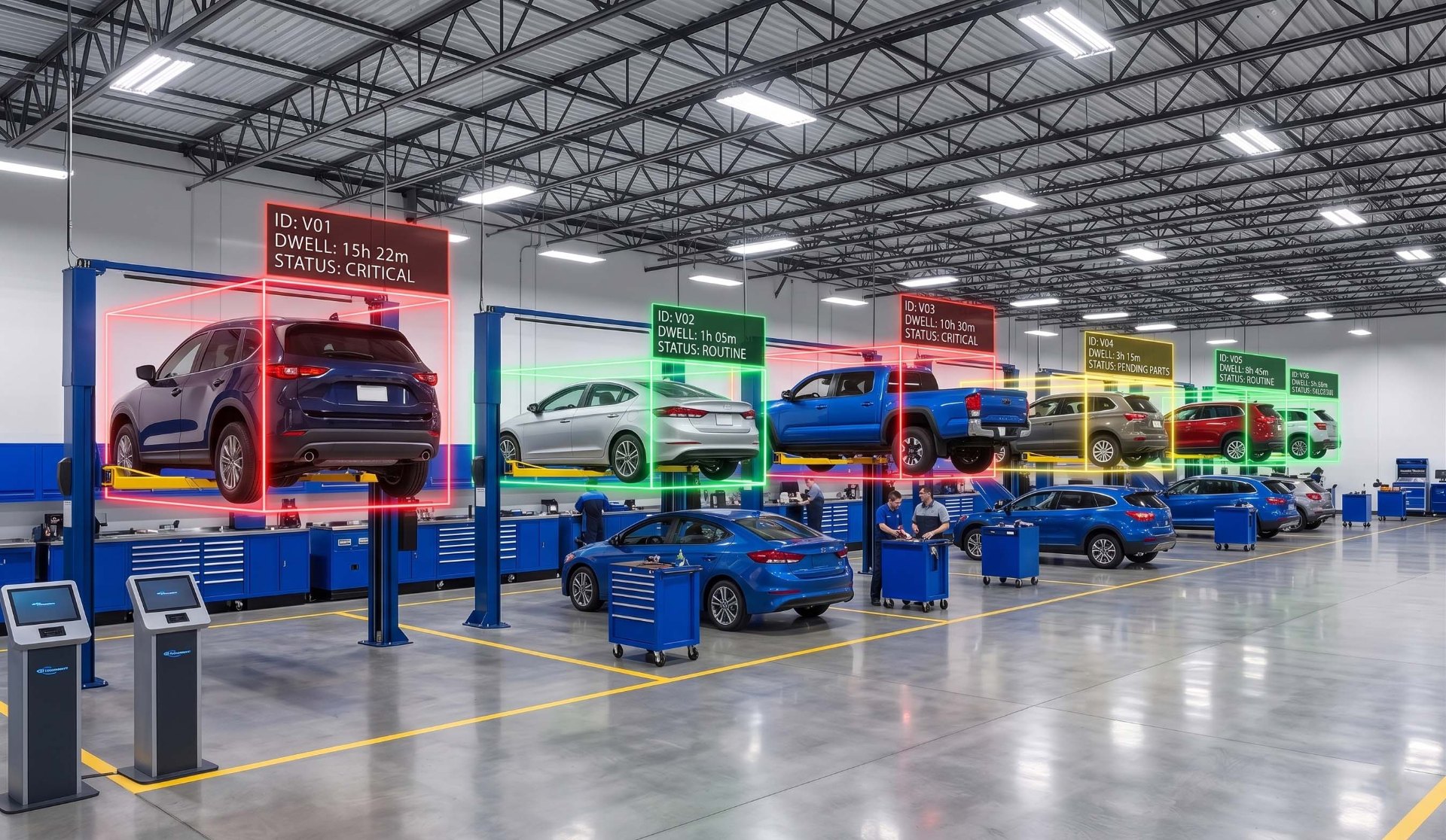
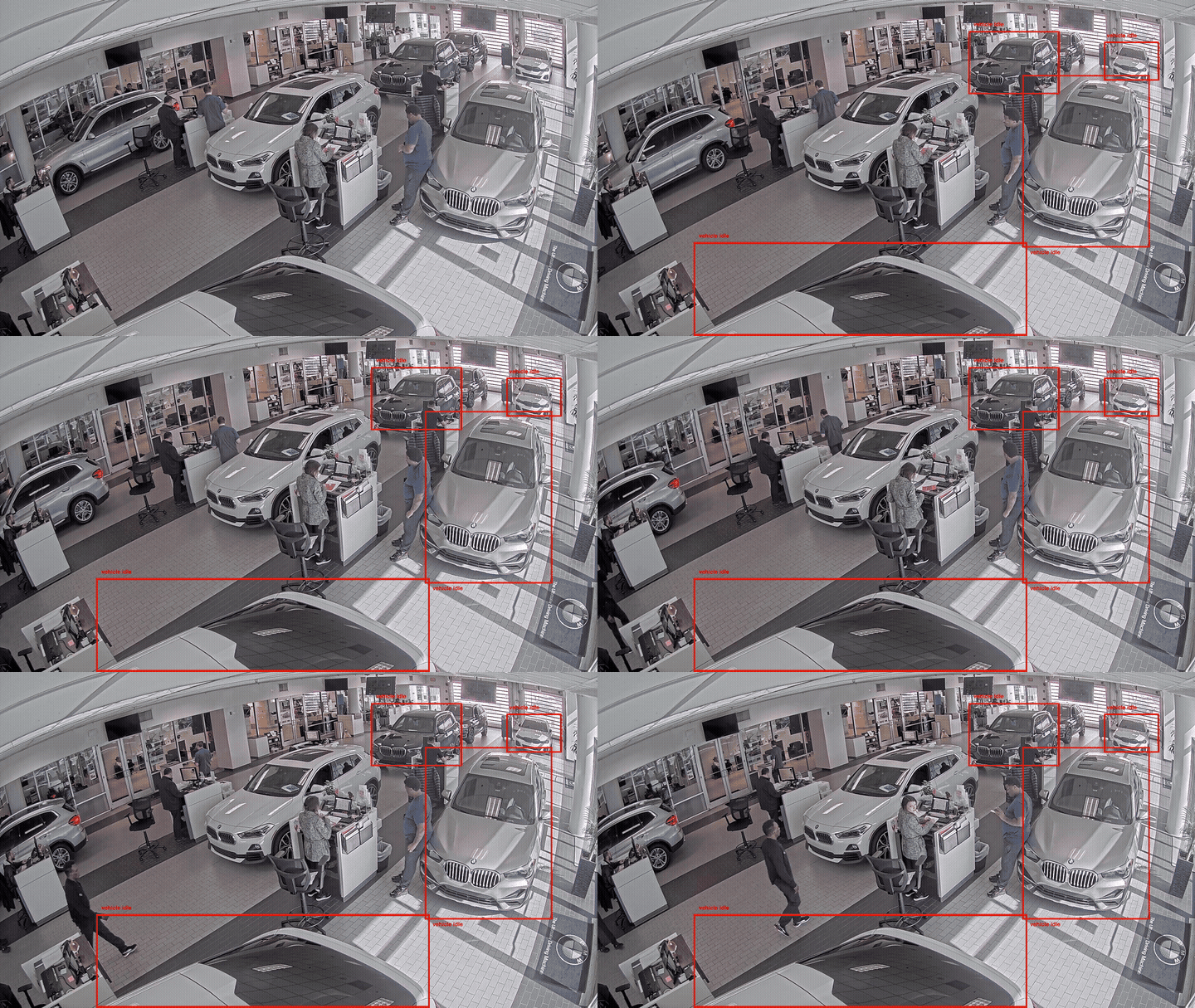
The platform tracks physical movement, dwell time, staging delays, bay activity, and process timing as the vehicle moves through the express workflow.
Bottlenecks Surface
Managers gain visibility into where vehicles are waiting too long, where bays or stalls are underused, and where handoffs or process steps are slowing throughput.
Managers Act Earlier
With clearer timing and workflow visibility, managers can address delays while the visit is still active instead of reviewing the issue after the customer has already waited.
See Where Time Is Being Lost
SKAIVISION gives managers a clearer view of the service process as it happens: where vehicles are waiting, where movement has stalled, which bays or stalls are idle, and which visits are falling outside expected timing.
Dwell Time
See how long vehicles are sitting in key service areas before the next step happens.
Staging Delays
Identify vehicles waiting too long before entering the bay or moving to the next service stage.
Bay and Stall Activity
Spot idle capacity, stalled movement, and areas where available resources are not being fully used.
Delay Alerts
Surface visits that fall outside expected timing so managers can respond while the customer is still waiting.
Faster Flow Creates More Capacity
In fixed operations, time affects throughput, labor utilization, customer experience, and profitability. SKAIVISION helps dealerships see where time is being lost so managers can reduce wasted movement, improve lane discipline, and create more capacity from the team and facilities already in place.
Higher Service Capacity
Reducing unnecessary dwell time and process delays helps the store move more vehicles through the express workflow without adding more bays.
Better Labor and Bay Utilization
Managers can see where advisors, technicians, stalls, and bays are underused or blocked by process friction.
Stronger Customer Experience
Faster, more predictable express visits help protect customer trust, CSI, and future service retention.
Reported express performance improvement from SKAIVISION cycle-time visibility and process tracking. View Express Performance Case Study →
Track the Process, Not Just the Outcome
SKAIVISION helps managers review where delays occurred, which visits exceeded expected timing, how long vehicles stayed in each stage, and whether process changes improved performance over time. That visibility creates accountability across advisors, technicians, lanes, bays, and rooftops.
Cycle-Time Reporting
Track timing from arrival through staging, service activity, completion, and delivery.
Bottleneck Review
See where time is consistently being lost across the express workflow.
Rooftop Consistency
Give leaders a clearer way to compare process execution and service performance across stores.
Questions Fixed Ops Leaders Ask
Does SKAIVISION replace my DMS reporting?+
No. DMS reporting shows important service data, but it often depends on manual entries and after-the-fact timestamps. SKAIVISION adds visibility from physical camera activity so managers can see movement, dwell time, bottlenecks, and process delays as they happen.
Does this require new cameras?+
In many cases, SKAIVISION is designed to work with existing dealership camera infrastructure when placement, coverage, video quality, and network access meet deployment requirements. A site review determines whether the current camera setup is ready.
What parts of express service can be measured?+
Measurement depends on camera coverage and workflow configuration, but common areas include arrival, staging, bay or stall activity, dwell time, handoffs, work completion, delivery movement, and delay thresholds.
How should a dealership measure success?+
Key measures include average express cycle time, percentage of visits completed within target, dwell time by stage, bottleneck frequency, bay and stall utilization, delay alerts, and customer wait-time trends.
Is this just a dashboard?+
No. The value is not only seeing a report after the fact. SKAIVISION uses physical camera activity to surface delays and bottlenecks while the visit is still active, giving managers a chance to act before the customer experience suffers.
Find the Cycle-Time Gaps Your Team Cannot See Manually
A SKAIVISION walkthrough can show how your existing camera activity becomes cycle-time visibility, delay alerts, bottleneck reporting, and better fixed ops accountability.